
Direct Answer
Oversized cargo shipping from China to the USA should be planned around packed dimensions, gross weight, loading method, export documents, customs classification and final-mile access. The best freight option is not always the cheapest line item. A reliable quote should explain pickup, packaging limits, port or airport handling, U.S. delivery conditions and any services that are excluded.
Why is oversized cargo from China different from ordinary freight?
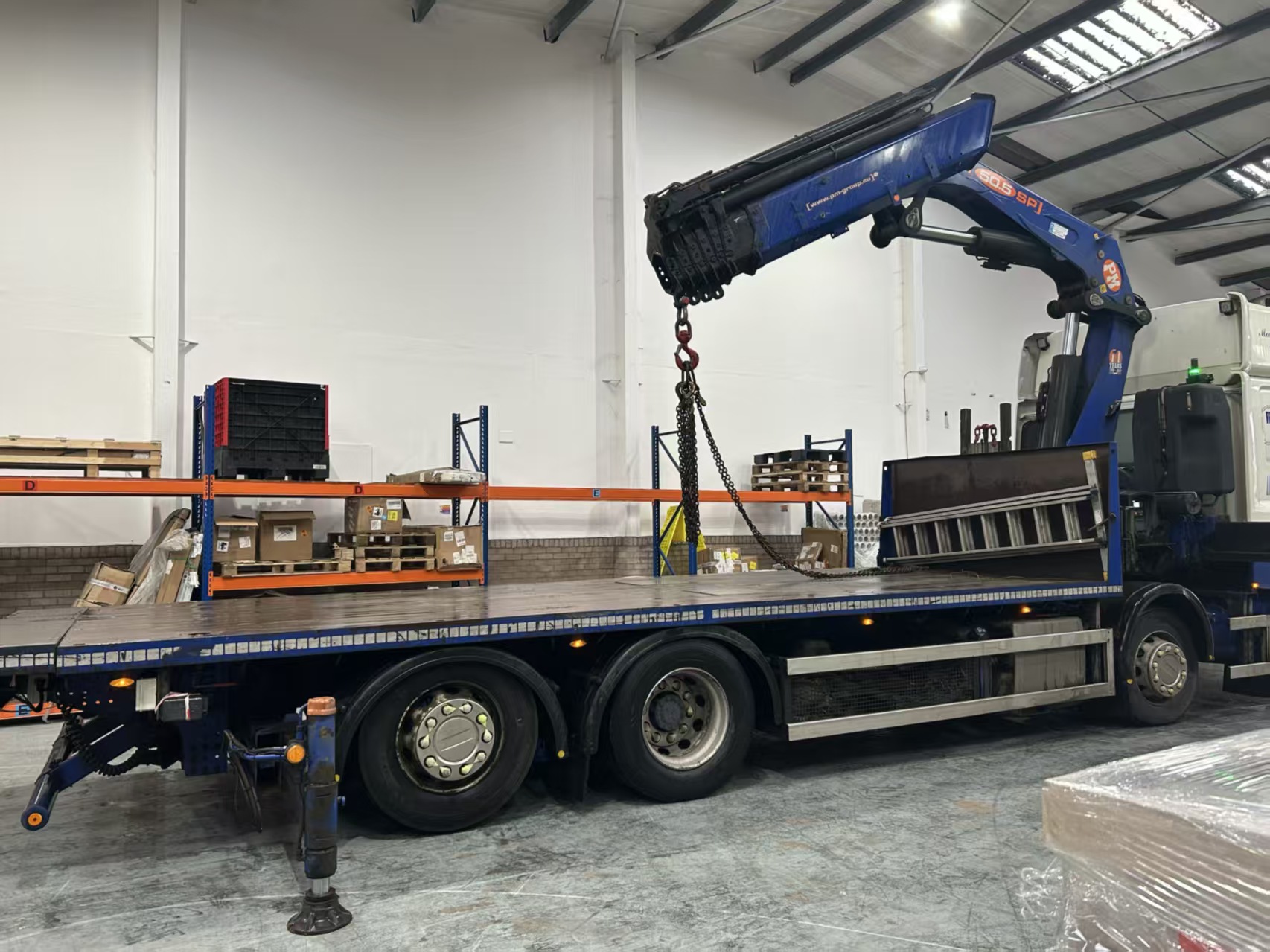
Oversized cargo is any shipment that cannot move easily as a standard carton, pallet or containerized load. The cargo may be too long, too wide, too tall, too heavy for normal handling equipment or too fragile for ordinary consolidation. Furniture, machinery, stage lighting, professional audio systems, display structures and industrial equipment often fall into this category.
The operational problem is not only the international freight leg. The forwarder must think through supplier pickup in China, factory loading conditions, packaging strength, export handling, customs documentation, U.S. terminal handling and final-mile access. If one of these steps is not checked early, the shipment may face revised charges, a delayed pickup, failed delivery or cargo damage.
In our shipment-planning process, the first question is practical: can the cargo be safely collected, loaded, transferred and delivered with the equipment available at each location? A low freight rate is not useful if the cargo cannot pass through the building entrance, cannot be unloaded at destination or needs a different truck than originally quoted.
What information determines whether cargo is oversized?
A buyer should provide packed length, width, height, gross weight, package count and photos of the final packaging. For machinery and large furniture, a product photo before packing is also helpful because it shows the shape, center of gravity and potential fragile points. Cargo measurements should be based on the packed unit, not only the product itself.
Forwarders use these details to calculate CBM, check container or aircraft limitations, estimate chargeable weight for air freight and decide whether special loading equipment is required. For air freight, actual weight and volumetric weight are compared, and the higher number normally becomes the chargeable weight. For ocean freight, CBM, overlength, overwidth and loading method often affect the quotation.
Which shipping method fits oversized cargo?
| Method | Best fit | Main limitation | Planning takeaway |
|---|---|---|---|
| FCL ocean freight | Large cargo that can fill or nearly fill a container | Requires container loading access and proper blocking | Confirm whether the crate can be loaded by forklift, crane or ramp. |
| LCL ocean freight | Oversized cargo that does not fill a container | More handling points and stricter packaging needs | Use stronger packaging and confirm terminal handling limits. |
| Air freight | Urgent high-value cargo within airline size limits | Chargeable weight and aircraft dimensions can be expensive | Confirm packed dimensions before requesting an air quote. |
| Express | Small urgent parts or samples | Often unsuitable for large, heavy or irregular cargo | Use only when the package fits courier restrictions. |
| Door-to-door truck delivery in the USA | Commercial or project-site delivery after import | Limited access, liftgate and appointments may add cost | Confirm final-mile access before shipment departure. |
How should the shipment be planned from supplier pickup to final delivery?
1. Confirm the cargo and packaging before pickup
Before pickup, the importer should ask the supplier for product name, HS code if available, packed dimensions, gross weight, number of packages, cargo value, packing photos and loading conditions. A shipment inspection can check visible packaging and labels, but it cannot replace a technical safety test or guarantee cargo condition inside a closed crate.
2. Review loading access at origin
Some factories can load a container directly. Others need a truck with tail lift, forklift support or crane service. For oversized cargo shipping from China, origin access can affect the pickup charge and the equipment used. A loading plan should explain how the crate will be lifted, whether the weight is balanced and whether the packaging is suitable for the chosen method.
3. Choose export and international freight route
The forwarder compares ocean freight, air freight, express and combined routing based on urgency, size, cost and risk. For heavy or large cargo, ocean freight is often more realistic. For urgent replacement equipment, air freight may be justified if the cargo fits airline handling limits.
4. Prepare customs documentation
Commercial invoice, packing list, product description, declared value and classification details matter for U.S. import. The U.S. importer remains responsible for import compliance, and customs-sensitive questions should be reviewed with a licensed customs broker or qualified adviser. The U.S. Customs and Border Protection import guidance and the USITC HTS search are useful official references.
5. Confirm final-mile access in the USA
A commercial warehouse delivery is different from a residential address, construction site, island route or limited-access location. The delivery plan may need appointment service, liftgate, inside delivery limitations or local handling equipment. These details should be confirmed before the cargo leaves China because they affect cost and routing.
Shipping Oversized Cargo from China?
Share the pickup city, destination postal code, cargo dimensions, gross weight, package photos and delivery-address conditions. Our logistics team can review the shipment information and identify what should be confirmed before booking.
Send Your RequirementsAsk a Shipping QuestionOperational checklist for oversized cargo
- Product name and practical application
- Final packed length, width, height and gross weight
- Number of crates, pallets or packages
- Packaging material and photos after packing
- Pickup city and supplier loading equipment
- Destination address type: commercial, residential, Amazon FBA or project site
- Delivery postal code and access restrictions
- Commercial invoice, packing list and cargo value
- Required delivery date and acceptable shipping methods
- Any installation preparation or site unloading requirement
When is standard freight not suitable?
Standard freight may not be suitable when cargo is extremely heavy, cannot be forklifted, exceeds container door limits, needs professional rigging, contains regulated materials or requires temperature control. In these cases, the buyer should request a customized review rather than comparing ordinary freight rates.
The operational takeaway is simple: oversized cargo shipping from China should be quoted as a handling project, not just as a weight and destination. The more clearly the buyer provides cargo measurements, packaging photos and final-mile conditions, the more realistic the shipping plan becomes.
What cost variables should be checked before comparing oversized cargo quotes?
Oversized cargo quotations can change when the buyer compares only the international freight line and ignores handling details. A realistic quote should identify whether the cargo needs forklift loading, crane loading, warehouse receiving, reinforced packaging, palletizing, container blocking, special truck delivery or a delivery appointment. These services are not always included in a basic freight quotation.
CBM is important for ocean freight, but CBM alone does not explain the whole shipment. A long crate may use container space inefficiently. A heavy machine may require equipment that ordinary warehouses cannot provide. A fragile item may need stronger packaging because LCL cargo can be handled more than once before it reaches the destination. For air freight, chargeable weight can rise quickly when the package is large but not very dense.
Importers should ask each forwarder to quote against the same shipment facts: pickup city, delivery postal code, packed dimensions, gross weight, cargo value, delivery address type and preferred delivery date. Without the same assumptions, the lowest quote may simply be the quote with the most missing information.
How should importers compare oversized freight quotations?
A buyer can compare oversized cargo quotations more safely by building a scope checklist. The first part is origin service: supplier pickup, loading equipment, China warehouse handling and export documents. The second part is international freight: FCL, LCL, air freight or combined routing. The third part is destination service: customs-clearance coordination, terminal handling, delivery appointment, liftgate, limited-access delivery and any special unloading requirement.
It is also useful to ask whether the quotation is based on actual packed measurements or supplier estimates. If measurements are estimated, the quote should be treated as preliminary. For cargo that is still being manufactured, the buyer should ask the supplier to confirm the final packaging design before the forwarder books space.
Good quotation comparison is not about forcing every forwarder into the same price. It is about identifying which forwarder has understood the real handling risk. Oversized cargo usually benefits from a calm review of operational details before a buyer decides.
Should importers consider cargo insurance?
Oversized and high-value cargo often has more handling exposure than standard carton freight. Cargo insurance can be worth discussing, especially for furniture, machinery, stage equipment and custom-built products. The buyer should understand that insurance terms, exclusions, claim documents and declared cargo value matter. A forwarder can help explain available options, but the buyer should review the policy wording before relying on coverage.
Insurance is not a substitute for packaging. If a machine is poorly crated or a fragile item is not protected for forklift handling, the shipment may still face preventable damage risk. Packaging review, photos before pickup and clear handling marks remain important even when insurance is arranged.
Questions to ask the supplier before booking
- Is the product already packed for export, or is packaging still pending?
- Can the supplier provide final crate dimensions and gross weight?
- Can the supplier load the cargo onto a truck or into a container?
- Does the cargo need a crane, forklift, ramp or other loading equipment?
- Are there fragile parts, glass, electronics or painted surfaces that need extra protection?
- Can the supplier provide commercial invoice and packing list details in English?
- Are there batteries, liquids, magnets or regulated components?
- Is the cargo urgent, or can it move by ocean freight?
These questions help the buyer avoid the most common mismatch between product readiness and freight booking. If the supplier cannot answer yet, the forwarder may still provide a planning estimate, but final booking should wait for confirmed packaging and documents.
Frequently asked questions
What is the cheapest way to ship oversized cargo from China to the USA?
Ocean freight is often the most cost-effective method for oversized cargo, but the cheapest method depends on packed size, weight, urgency, pickup city and delivery address. A quote should compare freight cost with handling, packaging, destination and final-mile delivery requirements.
Can oversized cargo move by air freight?
Yes, oversized cargo can move by air freight when it fits airline and airport handling limits. The buyer must provide packed dimensions and weight before the forwarder can check feasibility and chargeable weight.
Do I need a wooden crate?
A wooden crate is often recommended for fragile, high-value or difficult-to-handle cargo. The packaging should match the cargo weight, handling route and delivery method. Packaging requirements should be confirmed before pickup.
Can Good Logistics arrange pickup from a Chinese factory?
Good Logistics supports China-side pickup coordination. The pickup plan depends on supplier address, loading equipment, package size and truck access. For large cargo, factory loading photos are helpful.
Who handles U.S. customs clearance?
Customs clearance must be handled according to U.S. import requirements, and the importer remains responsible for accurate information. Customs-sensitive questions should be reviewed with a licensed customs broker or qualified adviser.
What can cause delivery failure for oversized cargo?
Delivery can fail when the truck cannot access the address, the site lacks unloading equipment, an appointment is missing or the crate is larger than the entrance. Final-mile access should be checked before booking.
Conclusion
Oversized cargo shipping from China to the USA works best when the freight plan is built around real cargo handling conditions. Importers should prepare dimensions, weight, photos, documents and delivery details before comparing quotes. Good Logistics Co., Ltd. can help review the shipment scope and identify what should be confirmed before booking.
External sources and references
Maintenance note
Review this article periodically for freight terminology, customs references, Amazon FBA receiving expectations, Good Logistics service coverage, CTA details and contact information. Customs-sensitive wording should be reviewed by a licensed customs broker or qualified adviser before final publication in a regulated context.
Editorial note
Drafted with AI assistance using provided Good Logistics materials and public logistics references. Good Logistics should review final service coverage, customs-sensitive statements and operational wording before using the content as a formal policy statement.
Related articles in this cluster
DDP Shipping from China to the USA: What Should Be Included in a Freight Quote?
This supporting guide helps buyers compare door-to-door DDP quotations and avoid unclear scope, hidden charges and compliance misunderstandings.
How to Consolidate Products from Multiple Chinese Suppliers Before International Shipping
This supporting guide targets buyers sourcing from several factories and explains consolidation workflow, document control and shipping-plan benefits.
Ready to Ship from China to the USA?
Tell us your cargo type, destination and timeline. Good Logistics Co., Ltd. will recommend the right solution — including oversized cargo, Hawaii, Alaska and Puerto Rico.
Get a Shipping QuoteResponse within 12 hours · Email or WhatsApp